

The importance of role playing games for your child | fonzell
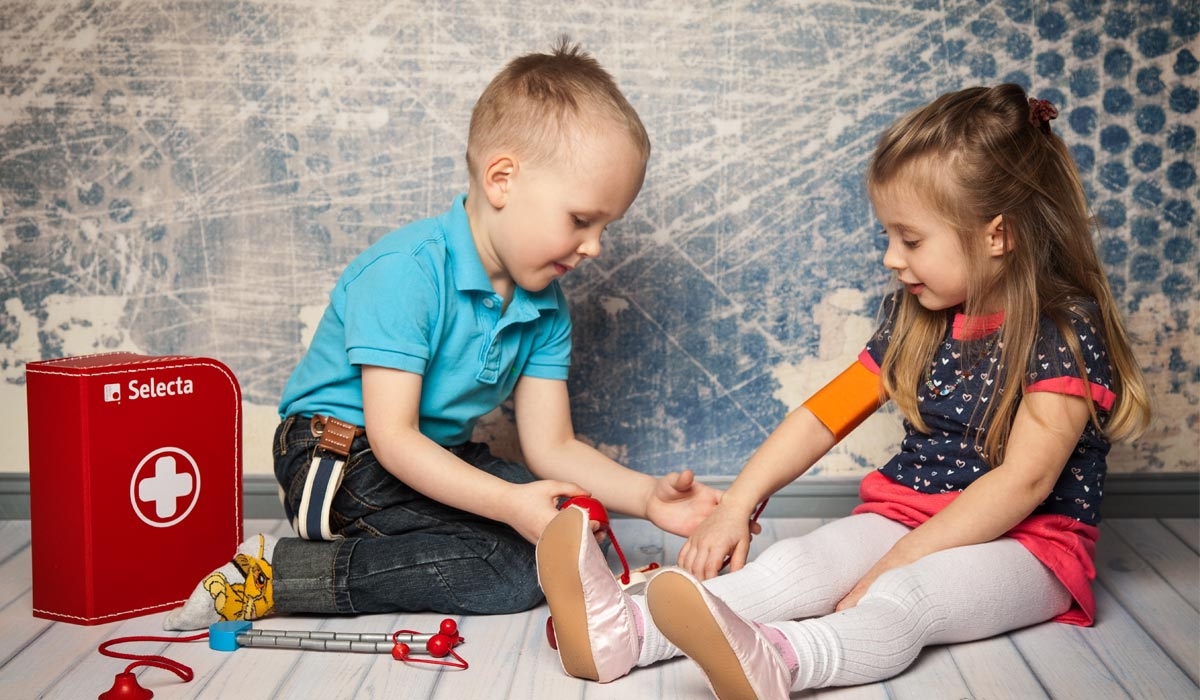
Has your child ever picked up the smartphone and pretended to call an imaginary person and have a conversation with that imaginary person? Has it ever picked up a plate and pretended it was a steering wheel and tried to drive it like it was a car? One of the most important parts of child development and learning is role playing, or so-called "pretend play", in which different circumstances are re-enacted using different means.
"Imagination is not an escape from reality. It is a way to understand." - Lloyd Alexander
What benefits do role playing games have for your child?
The world of children is full of fantasy and everything in it is alive. The benefits of pretend play for children are critical to enriching skills important to healthy development. Children love to play and that is why the best way of communication is through play. From around the age of 18 months children begin to explore their boundaries and try to develop their own identity - pretend play and such imaginative activities are the best way to develop their understanding of the world around them. Whether they're racing as a racer, rescuing people as a superhero, or examining their patients as a doctor, this type of role playing game validates their ability to learn through observation and allows them to practice what they learn in a safe and non-hazardous environment. During this process, the children create a story from scratch in their heads, including all possible details such as characters' names, their professions, dialogues between different characters, locations, etc., all by themselves. These activities make your mind more creative and imaginative. Reasons why role playing games are important for your child.
Role playing games encourage children's creativity and imagination. According to research, a child's ability to be creative and cognitive flexible is directly related to role play. In this type of games, children at an early age train their minds to use imagination. Not only is this important in problem solving, but later in life a good imagination helps when enjoying a good book, planning pleasant things in life, or simply understanding other people's perspectives on various aspects of life.
"Logic gets you from A to Z, imagination gets you anywhere." - Albert Einstein
The imagination game also improves language learning and develops children's communication skills. Children usually absorb new words immediately, combine them with their beloved character or role and a whole new vocabulary is built up. The role play gives them the opportunity to use this new vocabulary. Role play can help children develop their social and emotional skills. In fantasy play, children usually place themselves in an imaginary social setting and character in which they must find a way to communicate and engage with others. Most of the time, the children choose a role or character that they want to be in the future.
This allows them to understand why people in different characters and roles do what they do. When children play with other children, they may argue about things like choosing characters or how to play as a team. Acting out can help children resolve these conflicts through teamwork and brainstorming. Role playing games can also be a stress reliever for children, and that's one of the main reasons child therapists recommend it. Finally, role playing games also promote the physical development of children. In addition to all of the benefits of role playing for children listed above, they can also gain a lot physically. They run, climb ladders, carry things, and do many other physical activities during their game.
Various ways to encourage role playing
Children experience the real world through role play. They put themselves in circumstances similar to the real world, which can help them learn as much as possible. So now let's look at different ways to encourage them to do so.
- Start at an early age. Children can fantasize from a very young age. Playing can be tried from the age of one and a half years. To do this, you can give the child a limited number of toys. Try to use toys that stimulate the child's imagination and allow them to fantasize. Give your child 15 to 20 minutes to play with the toys. You can start with a shorter game time and gradually increase it. What will surprise you, however, is the power of the childish.
- Give them freedom and time to pretend to play. Many parents try to fill their child's daily schedule with numerous preplanned activities. However, a child will not spend their time like a regular punctual employee. This results in not having enough time for free play. When a child enters a new situation, they need time to invent and play a new story based on that situation. Do not rush, and begin to play only when the child is not exhausted and is focused.
- Spark their imagination. One way to develop a child's imagination and creativity is to use simple toys that do not have many functions. For example, a robot machine that does all the tasks by itself may be helpful, but it is not very suitable for encouraging a child's creativity since the car does everything on its own without requiring any involvement from the child. Simpler games can stimulate a child's imagination because they do not offer many options, requiring the child to imagine and complete the tasks themselves.
Final Words on role Playing
Play is an integral part of every child's life, as children learn a great deal and acquire new skills through play. role playing is one of the excellent practices to prepare a child for taking on adult roles while enhancing their physical and mental abilities. Since imaginative play feels more like fun and games rather than a rigid educational exercise, children enjoy such activities without even realizing they are learning. This is why imaginative play or role-playing is so valuable and priceless. Additionally, it helps children better understand who they are and what they want to become in the future as adults. These types of play can also assist parents in recognizing their children's interests and emotions. Providing children with appropriate toys, such as miniature household items, handy tools, cars, play dough, and so on, can be a great way to encourage them to create their fantasy world and play accordingly.
دیدگاه شما
The importance of role playing games for your child | fonzell